
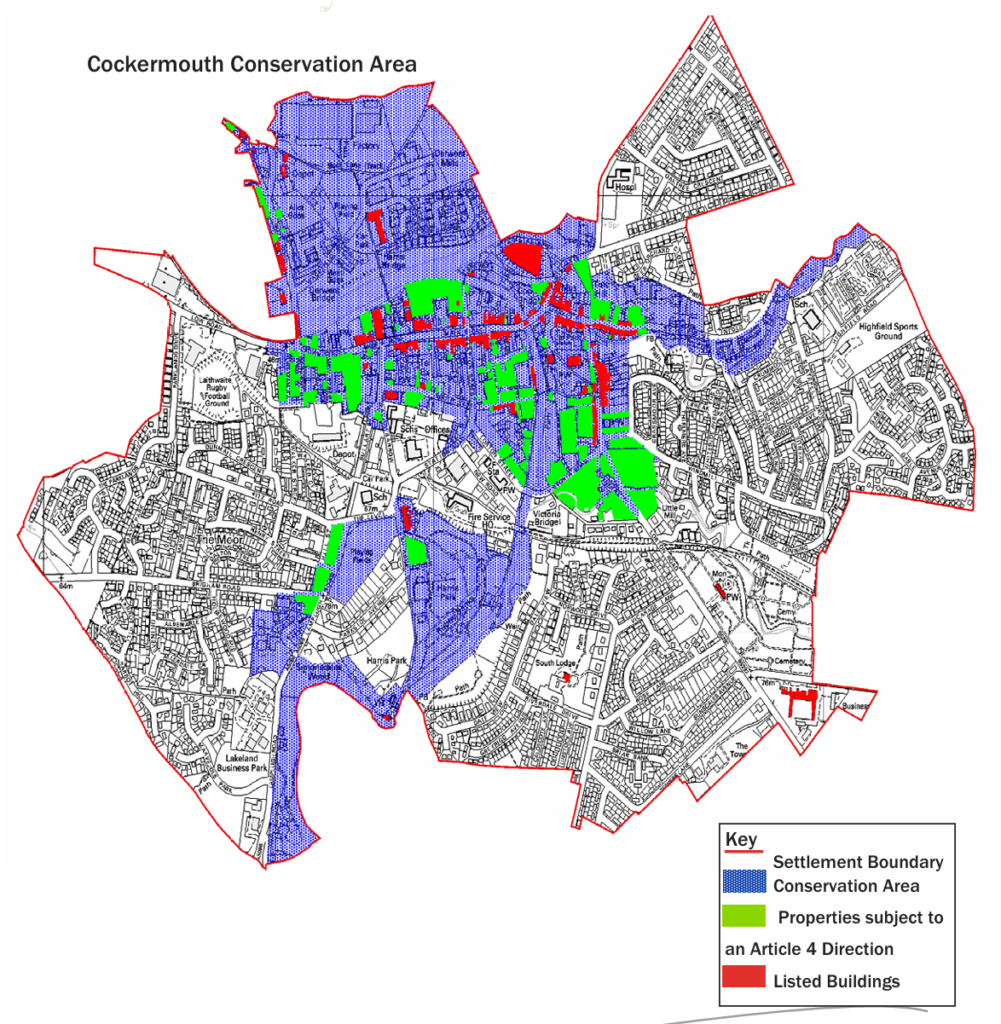
Cockermouth Conservation Area Design Guides
Cockermouth town centre sits within a designated Conservation Area, meaning that all works to buildings — from routine repairs to new shopfronts and extensions — are subject to planning controls intended to preserve and enhance its special character. Two guidance documents published by Cumberland Council set out what is expected of anyone carrying out such works.
The Conservation and Design Guide provides broad advice covering the full range of building works within the Conservation Area. It explains the area’s key characteristics: its Georgian and Victorian architecture, smooth rendered (stucco) facades, sash windows, cast iron rainwater goods, slate roofs, and the classical sense of order and verticality that unifies the townscape. The guide emphasises that regular maintenance is the most effective way to protect a building’s fabric, and that where repairs or replacements are necessary, traditional materials and techniques should be used. It also covers extensions, energy efficiency, new buildings, and the importance of the public realm. Throughout, the principle is one of minimal intervention — understanding why work is needed before proceeding, and avoiding unnecessary loss of historic fabric.
The Shopfront Design Guide focuses specifically on the ground-floor commercial frontages that define Cockermouth’s shopping streets. It traces the evolution of shopfront design from the 18th century onwards, explaining how the town’s characteristic Georgian and Victorian fronts developed. The guide sets out clear expectations for anyone designing a new or altered shopfront: painted timber construction is the appropriate material (UPVC and aluminium are not acceptable in the Conservation Area); proportions should respect the building as a whole and its neighbours; and traditional elements such as pilasters, cornices, stallrisers, and fascias should be incorporated. Signage should be restrained and bespoke, with internally illuminated signs and external roller shutters both prohibited. Canopies, where needed, should be of the traditional retractable canvas type.
Together, these guides make clear that Cockermouth’s character depends on the cumulative quality of individual buildings and shopfronts. Planning permission, Listed Building Consent, and Advertisement Consent may all be required depending on the nature of the works, and early contact with Cumberland Council’s planning and conservation teams is strongly advised before any project begins.